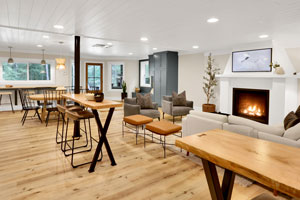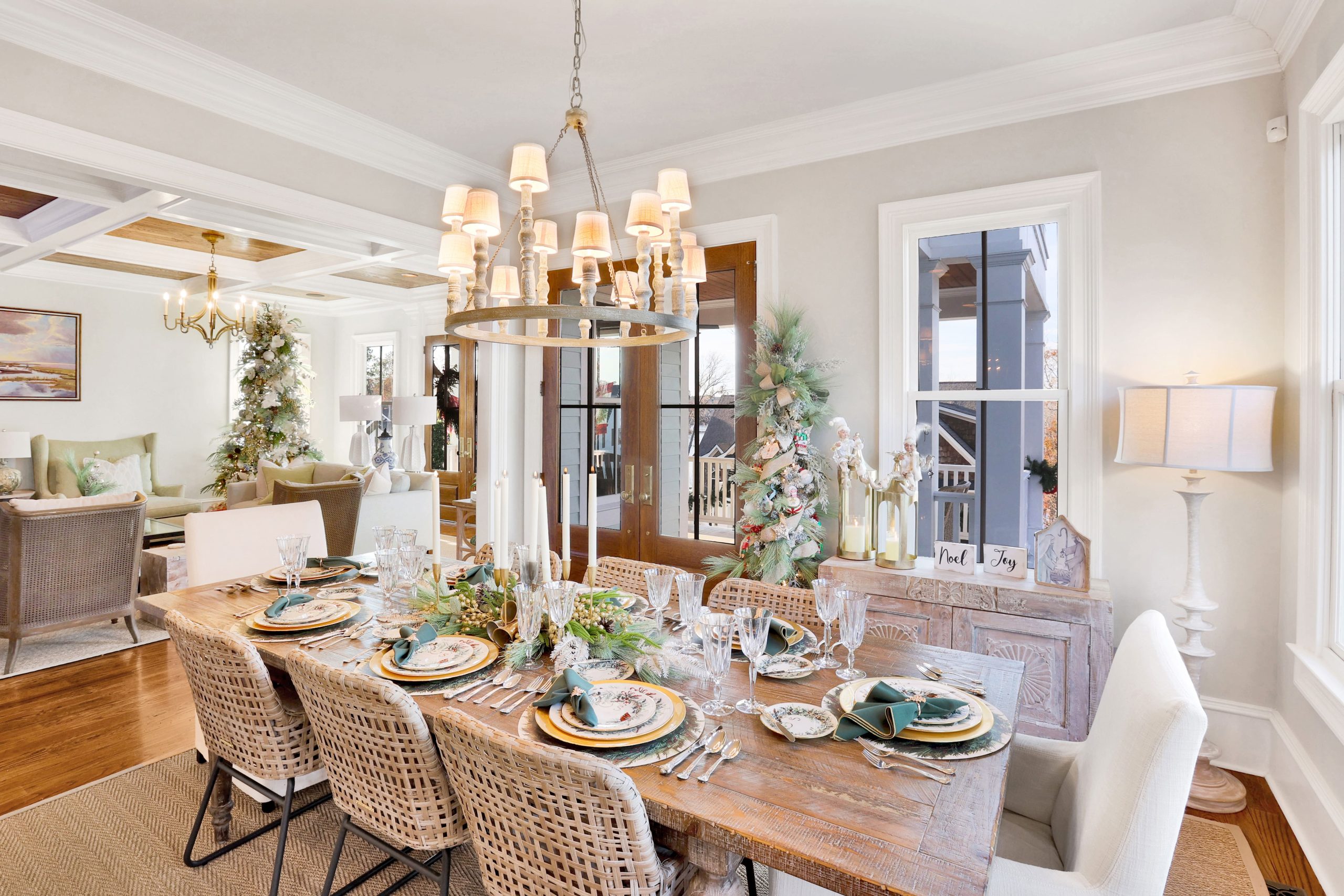
If it’s April in Augusta, then it must be time the Garden City Festival. The Garden City Festival at Sacred Heart is a spring celebration with strong roots in the area.

This two-day event will feature a wheelbarrow full of fun for those with or without a green thumb at Sacred Heart Cultural Center Friday, April 21 and Saturday, April 22. The annual festival also features tours of gardens that normally are not open to the public.
Festival-goers can gaze at landscape and floral exhibits; discover hard-to-find plants, garden accessories and decorative items in the Garden Market; and listen to experts in the fields of plants, garden design and eco-friendly living as part of the speaker series.
In Wandering Workshops, vendors will teach mini-sessions on various topics with pop-up demos. These quick sessions, located in the courtyard across from the speaker stage, will offer “how-tos” and valuable garden information.
On Seedling Saturday, families can garden together in hands-on activities such as planting sprouted seeds, making seed balls and learning different ways to start seeds. (Admission for children 12 and under is free with a ticketed adult.)
Food and beverage vendors will be on hand as well. Breakfast items will be available inside Sacred Heart’s Great Hall from 9 a.m. – noon Friday and Saturday, and lunch will be sold at food trucks outside the venue from 11 a.m. – 2 p.m. both days.
Tickets for the festival can be purchased by calling (706) 826-4700, online at sacredheartaugusta.org or at Sacred Heart and various locations in the area.
For those who want to branch out from the festival itself, other related events will take place at Sacred Heart as well.
A preview party is scheduled for 6 p.m. Thursday, April 20. Tickets are $75 per person, and the event will include shopping, dinner and music. For reservations, call (706) 826-4700.
An evening garden social, featuring a catered barbecue dinner, music by The Mason Jars and dancing, will be held 5 p.m. – 9 p.m. Friday, April 21.
Photography by Sally Kolar Before photos courtesy of Birdsong Design Co.
A family’s unfinished basement – a longtime group gathering spot – is transformed into a complete living space with a bedroom, bath and full kitchen.

At the Magnolia Ridge home of Evans residents Kelley and David Pope, their basement has long been a place for them to get together with their five children, their friends, their children’s friends, church groups and neighbors.
A year ago, however, they decided to turn the basement into a stylish, comfortable space to share with friends and family, so they turned to Amanda Pierce of Birdsong Design Co. for her expertise.
“It needed to be a place where we could gather and have food,” says David. “We use it every week for community events.”
Based on her clients’ needs, style and budget, Amanda, an expert in eDesign, puts together a detailed room plan that includes tips for placement and paint colors as well as shopping links to materials and furnishings to complete a custom project. She put together a design board for the Popes with their desire for a community space in mind.
“I knew that lots of different types of people would use the space. It needed to have more designated spaces for people to sit together,” says Amanda. “We wanted to bring in some elegance, some cozy and also some functional textures that could handle a lot of people.”
Sitting Pretty
The basement, which also was used as a play area and workout room, had become a place where a hodgepodge of furniture and exercise equipment had collected. With the three-month renovation, however, the room has become a cohesive space that is made for group get-togethers and serves as a place for overnight guests to call home.
Along with a sitting area with a fireplace and additional tables and chairs, the renovated basement includes a full kitchen, bedroom and bath.
“We wanted to make it a more functioning space for our groups and our parties,” Kelley says. “We wanted lots of seating, but we didn’t want it to be cluttered.”
The main sitting area features a sectional couch, two leather stools, two chairs with metal legs and a round metal table. David, Kelley and her father installed the fireplace, which has a plaster fireplace surround and a wood mantel that’s painted white, themselves.
Before the renovation, this area consisted of three large couches and no fireplace.
Additional sitting areas include two live-edge, handmade poplar tables with black X-shaped iron legs in the center of the room. The tables are positioned into poles in the basement as if they belong together. Black metal and leather chairs provide seating for the tables.
Inspired by an authentic Italian farmhouse, a wood table sits beneath a natural rope and patinaed brass tapered string pendant light. More black metal chairs surround the oval table.
“The chairs are light and easy to move, and black metal doesn’t fight with the floor,” says Kelley.
However, that is not the only benefit of the seats. The destruction-proof metal chairs are perfect for the group of 27 high school seniors that gathers in the basement every week to talk about their faith, their lives and their relationships.
The basement already included a bar. However, oak and metal stools, along with antique gray and blue concrete pendant lights above the countertop, updated the look. In addition, a pass-through window to the outdoor kitchen was added above the bar to bring in more natural light.
Before the renovation, the basement also had a concrete floor and a drop ceiling with a grid. Now, however, the room features durable LVP flooring and a vinyl plank ceiling with a wood look.
The kitchen features a Riad tile backsplash, sea pearl quartzite countertops, brass sconces above the black quartz undermount farmhouse sink and a brass faucet and hardware.
A mud bench, which is a catchall for pool-related paraphernalia such as towels, floats, goggles and water toys, acts as a bridge between the outdoor pool area and the inside.
Despite the multiple sitting areas, the basement still has plenty of floor space to set up cornhole boards or extra tables for game nights
The Test of Time
The bedroom and bath not only offer a place for overnight guests to relax and unwind. The living quarters also were designed with the idea that Kelley or David’s parents could one day move into the space if necessary.
Although the bedroom and bath previously were open spaces that held exercise bikes and a treadmill, the spaces now are cozy retreats. The bedroom features a wool rug, linen headboard, brass floor lamp and a night stand with a reclaimed wood look. A double pocket door leads to the room, and doorways to the bedroom and bath are wide enough to be handicap-accessible.
The bath features a vanity with a marble countertop; matte black fixtures, plumbing and hardware; and black matte wall sconces with shades. In the shower, a glass front half-wall showcases the white subway tile. The classic black-and-white penny and square tile flooring ties the room together.
David’s favorite spot in the basement is the kitchen island. “It’s the perfect place for people to connect with others, and it has a clear view to the pool and the woods outside,” he says.
After all, the kitchen always seems to be the gathering spot in any home. And, the Popes are quick to point out, even their young guests – including the teenage boys who meet there every Sunday night – take care of the space.
The couple appreciates that the space is beautiful as well as functional, and they plan to enjoy it for years to come.
“From the lock for the double door to the pulls for the bathroom door, every little detail is so fun,” Kelley says. “We did not want to be surprised. Everything in the basement was on our design board, and everything will withstand the test of time.”
Meet five new plants and two new peppers named champions for the 2023 garden season by All-America Selections.
Echinacea Artisan Yellow Ombre This winner, with intense golden yellow flowers and graduated shades of yellow, is a great plant for anyone wanting vibrant color all season long in their perennial garden. A lover of full sun, it produces a prolific number of blooms and works well in containers and as cut flowers. Pollinators will flock to this echinacea, and gardeners will love this long-blooming beauty for its low maintenance as well as its spectacular color.

Coleus Premium Sun Coral Candy The first seed coleus to ever win, Coral Candy features unique, multicolored foliage on a uniformly compact plant. The narrow, serrated leaves gracefully drape down the mounded plants, making it a perfect annual for containers and small space gardens. The leaves are vibrant on a tight, densely leaved plant, and the appealing foliage holds its color well, even in full sun. Just three seeds will produce enough substance to fill a 14”-16” container.
Colocasia Royal Hawaiian Waikiki This fantastic new elephant ear brings a touch of the tropics to your garden. Easily tolerating drought and heat, it wowed judges with its sturdy, large, glossy leaves that unfurl with a bold leaf coloration of pink veins and creamy white centers. The foliage is simply stunning, and the color on this new annual holds up well even in full sun. Exotically lush and compact, Waikiki adds drama to a garden and also grows great in 14”-20” containers.
Pepper Jalapeno San Joaquin This new jalapeno pepper will make gardening so much easier. It sets most of its fruit in a short window, so there is a generous number – about 50 per plant – ready at the same time. With just a hint of heat at 2500-6000 Scoville units, it’s perfect for canning, pickling and making roasted stuffed jalapenos for a crowd. If they aren’t used right away, they will hold their firmness and taste until you’re ready to harvest. Leave them on the plant longer for a beautiful red, and still delicious, jalapeno.
Salvia Blue by You Add a brilliant touch of blue to your garden all season long with this new perennial that blooms from late spring into fall. With bright blue flowers, Blue by You loves full sun (it has excellent heat tolerance), and is a stunning addition to pollinator, cutting and container gardens. As a bonus for gardeners, this new salvia is adored by hummingbirds and butterflies but not favored by deer or rabbits.
Pepper Cayenne Wildcat Pepper Wildcat is a high-yielding annual cayenne pepper that produces about 20-25 extra-large fruits per plant. These 8-inch fruits are straighter than traditional cayenne fruits and provide a smoky flavor, peppery sweetness and mild pungency of 500-1500 Scoville units. Their sheer size is astonishing, and their flavor and moderate heat level make these plants a multi-purpose pepper for the garden. Pepper Wildcat enjoys full sun and also works well in containers.
Snapdragon DoubleShot Orange Bicolor Hit me with your best shot…of double flowers. With open-faced double flowers in beautiful shades of orange and orange-red, this new snapdragon makes a spectacular statement in gardens, in containers and as cut flowers. The strong stems produce more branches, resulting in more flowers that bloom all summer long, even through high temperatures. For maximum flowering, plant in as much sun as possible.
12 tips for designing pet-friendly yards for Fido and Fluffy.
1. Know which plants are poisonous to pets. Many popular outdoor plants are harmful to pets. Poisonous plants include azaleas, rhododendrons, amaryllis and bulbs such as tulips, narcissus and iris. For an extensive list, visit aspca.org.
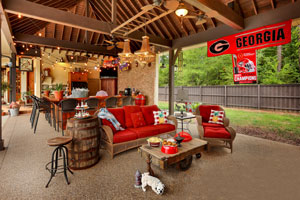
2. Landscape with flowers and plants that are pet friendly. Dog friendly garden plants include roses, daylilies, marigolds, magnolias, ornamental grasses, junipers and lilacs. Cat friendly plants (yes, they like to eat their greens) include catnip, catmint (bees and other pollinators like these flowers, too) and cat grass.
3. Keep select garden veggies separately fenced. Foods like onions, tomatoes, chives and garlic are fine for human consumption, but they are toxic to pets. Fence off your garden if growing these vegetables.
4. Create a lawn with a pet-proof grass. Lawncare experts recommend a variety of grasses such as Bermudagrass, Kentucky bluegrass, perennial ryegrass, fescue and zoysia for homes with dogs. All of these have thick roots, rapid growth rates and a tolerance for high traffic.
5. Give your cats some seclusion. Cats enjoy a nice patch of grass for sunbathing, but they also like their privacy. Create nooks and crannies where they can hide by setting up a group of container plants or hollowing out spaces under existing plants where they can retreat from the world.
6. Consider a catio. Think outdoor resort for your cat. These open-air, screened structures are often built on patios or around tree trunks and should include a cat bed, toys, climbing poles and varying levels where they can jump or lounge.
7. Design a landscape that includes shade and shelter. If your dog spends a large part of the day outdoors, make sure it has access to shade, water and protection from the elements. If trees don’t create shady spots, create one with a pagoda, shade sail or doghouse.
8. Be sure water features are pet friendly. An outdoor fountain or water feature can be a creative way to keep your pet hydrated. However, make sure the water circulates well to help prevent mosquitoes, and avoid water treatments that can harm pets. And remember: if pets can get in the water, they need to have a safe, easy way out, too.
9. Beware of food and garden waste, aka compost. Although compost can enhance garden soil, some foods can create problems for pets. For instance, coffee, moldy food and certain fruits and vegetables, including some stems, leaves and seeds, are toxic to your pets.
10. Maintain your yard to keep fleas and ticks at bay. Keeping your yard free from overgrowth, puddles and lawn debris helps to reduce the chance of fleas and ticks. Planting your garden with flea-repelling plants such as chamomile or lavender also is a natural way to help keep your pets safe from pests.
11. Play fetch with a toy bone instead of a stick. When fetching a stick, your pooch accidentally could swallow part of the wood. Splinters can get stuck in its mouth and esophagus; larger fragments could cut the stomach lining and intestines or cause constipation. Play it safe with toys.
12. Avoid burning yard debris. Burning trash releases chemicals that can lead to asthma and mouth burns, among other injuries, in humans and animals. Once the fire has been extinguished, the ash still contaminates the grass where your pets walk.
Influences from near and far drove the design of this Columbia County home.
Drawing on her Italian heritage, plus a dash of her Louisiana roots, Barbara Frantom has brought a touch of Tuscany to the custom home she and her late husband, Sam, built in Evans.
Collecting items for two years before they moved into the house in 2017, she made sure everything had a place before she brought it into their home. And she knows the history of every piece as well.
“I know where everything in the house came from or who gave it to me,” Barbara says.
European Inspired
While she was collecting furnishings and décor for their home, which includes many family pieces, Barbara had the design in mind all along. The art, cathedrals and homes of Europe were her inspiration for the interior of the Tuscan-style house. A large veranda lines the back of the house, and the spacious rooms are filled with elements of nature such as wood, stone, wrought iron accessories and earth tones.
Barbara wanted an open floorplan, where European oak flooring runs throughout much of the home, but she looks up to two of her favorite architectural features.
The dining room has a cove ceiling, a design that Barbara borrowed from European churches, and a brick barrel ceiling brings character to a long hallway. Sharing travertine tile flooring with the foyer, the dining room also includes a double pedestal table, another dropleaf table against one wall, a serpentine buffet and two china cabinets.
“I like a mix of furnishings. I’m not a minimalist. I’m much more traditional,” says Barbara.
With a wooden French seamstress doll atop a table and a German grandfather clock against a wall, the foyer includes slices of Europe as well. The tapestry on the wall belonged to Barbara’s mother.
In the barrel-ceilinged hallway, the Stations of the Cross wall hanging came from a mission church in New Mexico. A friend of hers made an angel picture, one of many angels throughout the house, for her out of diamond glass beads because Barbara, a four-time cancer survivor, has an affinity for angels.
Arched entryways from the hallway lead into the great room, and the Frantoms designed the house around the spacing of three sets of double doors that lead from the great room to the veranda.
The great room features a two-story ceiling with beams and two large oak bookcases. One of the bookcases was built to accommodate a TV, and the other was built around a secretary that belonged to Barbara’s mother.
Originally in an old house in south Georgia, the wood fireplace is built on top of a travertine tile base to meet code specifications.
“We couldn’t have wood on the floor, so we had to cut off the base of the fireplace,” says Barbara. “We elevated it by putting Travertine beneath it.”
Two antler-shaped light fixtures — they’re actually made of wood that Barbara hand-rubbed — came from the Jones Creek clubhouse.
The slate coffee table belonged to Barbara’s mother, and mix and match chairs are placed intimately side-by-side in the great room.
“I like lots of little private sitting areas. I like for people to be able to have conversations,” Barbara says.
A wrought iron wall hanging occupies space above each bookcase, and artwork featuring two outstretched arms reaching toward each other is made of copper and black metal.
Open Space
The great room leads into the adjoining kitchen – Barbara’s favorite spot in the house – and the floorplan gives the kitchen easy access to the rest of the house.
“I don’t like for the cook to be excluded from all the activity, so I wanted an open area,” says Barbara. “I love to cook. I cook Italian food, Louisiana food and Southern food. I’ll try most anything.”
With a countertop that is made of a single piece of granite, the large island serves as the prep area when she entertains friends and family. The kitchen also features stainless steel appliances and a travertine tile backsplash.
The connecting hearth room features a cathedral ceiling with oak beams, a stone fireplace and a bar with a wine rack and shelves that are draped with illuminated decorative grapes.
Furnishings include a 1917 German credenza that the Frantoms bought in Louisiana. An old working cutting table, which came from Cleveland, serves as the spot for casual dining. Barbara found it at the Atlanta Market, and, from wine bottles and glasses to grapes and cutting boards, she has arranged the tabletop with all the makings of the perfect Tuscan picnic.
In other nods to her Pelican State roots, Barbara has a collection of clowns such as the two that sit on the German credenza. A Mardi Gras mask hangs in a window in the hearth room.
A large stained glass window – a focal point in the room – faces the pool area. The Frantoms bought the window, which originally was in TGI Fridays in New York, at an antique shop in Florida and stored it until they were ready to build.
Sam made most of the other stained glass windows in the house, and one with birds, which hangs outside, came from the top portion of Barbara’s mother’s back door. Barbara makes all of her own floral arrangements, including the matching pair on the front doors.
More artwork can be found in a hallway that serves as a canvas for a collection of prints from Louisiana and two paintings by Barbara’s aunt, who was an artist in Baton Rouge.
The furnishings in the “monkey” bath, which features several decorative monkeys, give this room a European feel as well. They include a bench and an armoire that was hand-carved in the Philippines.
“In Europe, they don’t use built-ins in the bath,” Barbara says. “They bring in furniture.”
She also furnished the master bath with a dresser and another armoire. The crystal chandelier in the master bath, which includes a soaking tub, walk-in shower and travertine tile floor, came from her mother’s dining room.
Architectural features of the master bedroom include a trey ceiling and a bay window.
The sitting area in the room includes her hope chest, a gift from her mother that was carved out of camphor wood. Although the armoire, circa 1912, came from the Woodrow Wilson house in downtown Augusta (it includes a brass plaque as authentication), Barbara found it at an antique store.
She didn’t just scout out antique shops to find treasures for her home, however. She found many of her pieces at consignment stores as well.
“Someone else’s loss has a new home with me,” she says.
Game Day
While traces of Europe are prevalent throughout the interior, the covered outdoor kitchen and sitting area are pure Americana. Especially on game day during football season.
Behind the pecky cypress bar, Barbara hung flags that her friends have given her to represent their favorite schools.
Of course, the purple and gold Louisiana State University flag from her alma mater, where she majored in art and was Miss LSU, is larger than the other flags along the brick wall. However, she is happy to display the banners of the rival schools – and UGA’s national championship season in 2021 – as well.
With one TV in the outdoor kitchen and another in the adjoining covered seating area, her backyard is the perfect spot for football fans to watch the action.
“I like to have chili parties during football season,” Barbara says. “I love to entertain. I love everything about it. I work well under stress. I don’t do well when I have too much down time.”
Photos courtesy of Sacred Heart Cultural CenterThe Garden City Festival is back in full bloom with familiar – and new – activities.
Springtime in Augusta is synonymous with the Masters Tournament. However, the Garden City Festival at Sacred Heart is another spring celebration with strong roots in the area.

“The festival has been a tradition since 1992,” says Kim Overstreet of Sacred Heart Cultural Center. “It started as a small flower show, but it has grown through the years as new features have been added.”
Although the event was cancelled in 2020 and a modified version was held in 2021, this year’s festival will have something for everyone from to novice to experienced gardeners.
The Garden Festival Preview Party, which begins at 6 p.m. Thursday, April 21, will kick off the festivities.
The evening will feature fine cuisine, musical entertainment and the first viewing of the gardens and floral exhibits created by local garden professionals. Guests also will have the first opportunity to shop for plants and garden accessories in the Garden Market. Tickets are $75 per person.
The festival itself will run from 9 a.m. until 5 p.m. Friday, April 22 and Saturday, April 23 at Sacred Heart. Festival-goers can see landscape and floral exhibits, shop in the Garden Market, enjoy Seedling Saturday and the Butterfly Habitat and Garden Tour, and hear educational speakers during festival hours.
The Speakers Series will offer how-to demonstrations and tips that people can use to enhance their gardens. As a new addition this year, vendors will teach 30-minute Wandering Workshops on topics such as “How to Create a Container Garden” and “Cooking with Herbs From Your Backyard.”
“The workshops will cover simple things that people can take home and do,” Overstreet says.
Food trucks and vendors also will be available from 11 a.m. – 2 p.m. on Friday and Saturday.
Advance tickets for the festival and garden tours are $25 for both days until April 21. Tickets will be sold at the door for $30. Tickets for the festival only are $10 in advance and $15 at the door.
The private garden tours are scheduled for noon until 5 p.m. Friday and Saturday. Featured gardens include three in Augusta and three in Walnut Hill in Evans off of Gibbs Road.
The festival also is collaborating with Pop-Up Augusta! for its first ever Friday party – an exclusive dining and concert experience from 6 p.m. – 9 p.m. The location will be revealed 48 hours prior to the event to ticketholders only. Register at popupaugusta.com to receive an exclusive ticket invitation.
The festivities will conclude at 4 p.m. Sunday, April 24 with the Blanton Garden Tea at Blanton Farm. This event will include fare from recipes featuring organic produce grown on the farm as well as afternoon tea. The gardens will open at 4 p.m., and seating, which is limited, will follow at 5 p.m. for a talk and tea. A separate ticket is required. Call (706) 826-4700 for reservations.
“We want people to experience good gardening ideas, be inspired and learn something about eco-friendly living at the festival,” Overstreet says. “Whether someone lives in a small space like an apartment or on a large landscape, they should be able to take away something.”
Tickets are available online at sacredheartgardencityfestival.com, by phone at (706) 826-4700 or at various locations including Sacred Heart.
Dreaming of turning your yard into a personal paradise? Several palms native to Georgia thrive here with minimal care.
There are few sounds in nature as beguiling as the rustle of palm fronds in an ocean breeze, and no other tree sets us dreaming of faraway places quite like the palm.
No tree looks more exotic. Cypress trees may look as timeless and banyan trees may look as tropical, but palm trees look timeless, tropical, and exotically mysterious.
It’s impossible to imagine the Caribbean, the South Pacific or any respectable oasis without palm trees in the picture. If they could talk, palms could probably tell us plenty about dinosaurs and what the Garden of Eden was really like. Palms have seen it all.
Today, homeowners, businesses and golf courses alike feature this tropical icon in their landscapes. Look closer though, and you will usually discover that many of these local palms are not tropical at all but are actually native to Georgia.
Four authentic palms native to the Peach State are the Needle Palm, the Dwarf Palmetto, the Saw Palmetto and the Sabal Palmetto. All are cold hardy, and the Needle Palm is considered the hardiest palm tree in the world.
The advantage all native palms have in common is that they are cold hardy and can handle temperatures below freezing and still recover quickly. The best time to transplant most palms is in spring or summer, when soil temperatures are warmer. Keep in mind that most palms do better in sandy soil — clay holds water and does not warm as quickly.
Sabal Palmetto The most popular native palm here is the Sabal Palmetto, also called a Cabbage Palm, and you may recognize it as the official state tree of South Carolina and Florida. This hardy palm tree stays green year-round and matures to a height of about forty feet. It is topped with fan-shaped palm fronds that can grow up to five feet long. While they do not have traditional growth rings, it is believed they can live 200 to 300 years.
Sabal Palmetto is easy to transplant, easy to grow and easy to maintain. It grows best in well-drained soils that can be sandy, loamy or clay, but needs lots of sun — it cannot grow in the shade. For tree health (and to keep pests from nesting in the tree), trim the dead palm fronds annually.
Dwarf Palmetto The fan-shaped Dwarf Palmetto, a shrub-size palm, can live to be more than 400 years old. This smaller relative of the Sabal Palmetto provides a nice anchor in the garden, especially small spaces.
Able to grow in nearly any type of soil, from sand to clay, Dwarf Palmetto tolerates a variety of conditions and is fairly easy to maintain. It has an underground trunk and likes its head in the sun and its feet near the water. Water regularly for its first two years in the ground to allow it to get established. You can expect it to reach a height between two and seven feet with a spread between three and five feet. Prune browning palm fronds to keep the palm healthy.
Needle Palm The slow-growing Needle Palm is an attractive, low-maintenance, pest-free palm that is easy to grow in just about any landscape. Though it rarely stands higher than eight feet (usually around four to six feet), it is a nearly trunkless palm, almost always appearing as a shrub. It gets its name from the sharp needles on its crown that protect the interior of the plant.
The Needle Palm will grow in both sunny and shady locations but thrives best if given some shade in the afternoon. It loves regular waterings at first but is very drought tolerant once established. Needle Palm stays green year-round and can take temperatures as low as minus ten degrees.
Saw Palmetto The shrubby Saw Palmetto provides a lush, tropical touch to landscapes and works well as a privacy hedge, foundation planting or backdrop for mixed borders. It usually grows five to ten feet tall and spreads four to ten feet wide. Though typically green, a silver form of this palm is highly prized. Slow-growing and low-maintenance (occasional pruning of dead fronds is all this plant needs), Saw Palmetto is a sun-loving palm but will grow in almost any light. Water regularly after planting until established. Then it will be drought tolerant.
Saw Palmetto is difficult to move once established, however, so be sure to pick the right spot for planting — away from walkways, driveways, play areas, or anywhere the saw-like teeth along the stems might cause harm.
A Popular Non-Native One major contender on the local palm scene — the Sago Palm — is not native and actually not even a palm. It’s a Cycad, a species that has been around for millions of years and has more in common with ferns than with palms. It’s easy to understand its popularity, though. With a big branching trunk and dark olive leaves that are three to four feet long, it’s very easy to grow.
In fact, with a look that is straight from an oasis, the Sago Palm is so luxuriant and palm-like that it’s become one of the area’s leading landscaping plants. Native to southern Japan, it is cold hardy, usually free from pests and prefers a sunny location with sandy soil and good drainage.
A Martinez couple built a “pandemic potting shed” themselves to fulfill a vision and to pass the time during quarantine.
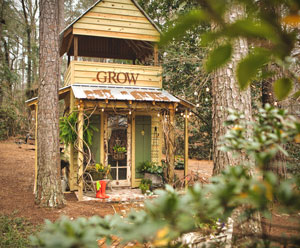
In the 13 years that Martinez residents Phyllis and Rob Collier have lived in their Watervale home, they have made several additions to the property. They built a master bedroom downstairs and a detached garage that serves as a workshop for Rob and a gym for Phyllis. They also planted a garden on the side yard.
Despite all of these home improvements, there was still one project that Phyllis, who calls herself and her husband “yard nuts,” always wanted to pursue.
“I’ve always wanted a shed to have a place to keep my gardening supplies and to do my potting,” she says.
The Colliers love to antique, so anytime Phyllis found a treasure at a quaint little shop, she would buy it and save it for future use in the shed. For instance, when she found two long antique shutters, each with a diamond-shaped cutout, she knew they would be part of the shed.
“I had them stored away. Rob knows not to question if I have a vision for something,” she says. “I knew the shed was something I wanted to do eventually.”
Putting in the Work The time to build the shed finally arrived last March when everyone was quarantined because of the coronavirus pandemic.
Phyllis and Rob, an internal medicine physician at the Charlie Norwood VA Medical Center and a former builder, got to work, and their “Pandemic Potting Shed” started to bloom.
“He drew it and came up with the concept,” says Phyllis. “I told him what I wanted.”
Finishing the project in September, it took them about six months to complete the 8-foot square shed.
“When the weather was nice, we worked on it every day,” Phyllis says.
Rob framed the building, and after his back went out, Phyllis dug the footings.
They used old brick that Phyllis found on Facebook Marketplace for the floor, which they laid themselves. They had the 1-foot-by-6-foot treated pine siding custom-made, and sometimes patience was required to complete their labor of love. They had to wait for the floor to dry after they laid the brick, and it took four months for the specially ordered siding to arrive.
Phyllis found the porch light for the shed at an antique store in Warner Robbins. “It looked like there was no way to reuse it,” she says.
The shed also includes a metal roof and awning windows. Phyllis found the windows and door, which was missing a glass pane, at a local antique shop. She also painted the antique shutters moss green, and they flank either side of the door.
“I wanted everything for the shed to be old,” Phyllis says.
She got strands of grapevine from a friend in Millen who makes grapevine wreaths, and she wrapped the vine around the eaves of the front porch. “I can put lilac in it, or confederate jasmine can grow up into it,” says Phyllis.
The shed is enclosed under a treehouse that the Colliers built for their eight grandchildren several years ago, and the ladder to the treehouse is inside the shed.
“I learned a lot. I had never laid a brick before,” says Phyllis. “We’re avid cross fitters, but I got a good workout when we built the shed.”
‘Winging It’ In the shed, Phyllis keeps lots of clay pots, an old antique bench and indoor plants. Rustic heart pine shelving provides additional storage space, and the shed also has power and running water.
“Sometimes I just go in the shed and hang out,” Phyllis says.
The Colliers have three raised beds in the yard, and they plant annuals and perennials. Phyllis especially loves daffodils and tulips, and she does most of her gardening in the spring and the fall. They grow some vegetables including tomatoes, cucumber and squash as well.
“I’m not a master gardener,” says Phyllis. “I’m just winging it.”
One of these days, the Colliers hope to get to their next project – adding an outdoor living space off of the sunroom. In the meantime, they can enjoy their new potting shed and appreciate the therapeutic qualities the building process had for them.
“I had energy that I couldn’t channel because we couldn’t go anywhere or do anything,” Phyllis says. “It was fun to see the progress and think, ‘Wow! I did that myself.’”
Georgia’s garden expert, Walter Reeves, offers a week-by-week guide to gardening in May
Week One
Treat azaleas for lace bugs Treat for azalea lace bugs if you’ve had problems in the past. Insecticidal soap, horticultural oil and synthetic insecticide chemicals all work well, sprayed under the leaves.
Check trees for beetles Look for tiny “toothpicks” on the trunk of your Japanese maple, Kwansan cherry and other small landscape trees. The Asian ambrosia beetle is spreading death-dealing fungus inside the trunk.
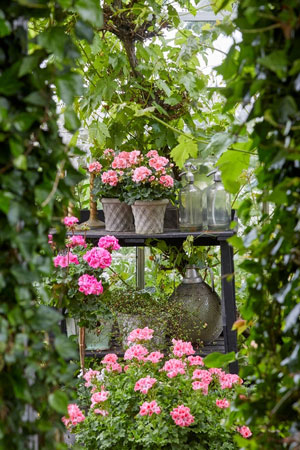
Plant summer flowers Plant coleus, geraniums, petunias and vinca for summer-long color in your landscape.
Level your lawn Fill the ruts and low spots in your lawn with a 1:1 mixture of sand and topsoil. Sweep with a broom afterwards to expose growing grass blades.
Week Two
Ward off caterpillars
Apply Bacillus thuringiensis to cabbage, broccoli and cauliflower to ward off cabbage looper caterpillar damage as these plants mature.
Trim crape myrtle sprouts Snip off sprouts from the base and lower trunk of crape myrtles that are being trained to grow in an upright tree form.
Remove dead limbs Remove leafless limbs from shade trees. If they don’t have leaves by now, they won’t be coming back.
Divide your irises Dig, divide and transplant your crowded irises to a better location, if needed, after they bloom.
Prune azaleas Prune early flowering azaleas now that they have finished blooming. Remove tall sprouts at their base, inside the shrub.
Week Three
Prune rhododendrons Pinch out the growing tips of rhododendron limbs now that flowers are gone. You’ll get many more flowers next year.
Plant herbs for mealtime flavor Plant rosemary, basil, oregano, dill and other herbs to use in time for some tasty summer meals.
Mulch tomatoes Place a newspaper mulch 10 sheets thick under tomato plants to prevent leaf diseases. Cover with any organic mulch.
Plant more vegetables Plant corn, squash, beans and peas now that the soil is quite warm. Make another planting of corn in two weeks.
Make an automatic waterer Drill a one-eighth-inch hole in the cap of a two-liter soft drink bottle. Fill the bottle, cap it and upend it in the soil of your patio plants to slowly water them during the day.
Week Four
Control fire ants
Control fire ants by lightly scattering a bait over your lawn. Forty-eight hours later, use an insecticide on any large mounds you can see. Repeat in September.
Water your plants Plants need an inch of water per week. What’s an inch of water? If rainfall or irrigation fills an empty soup can to a depth of one inch, that’s just what plants need.
Help your houseplants Don’t put rocks in the bottom of houseplant pots. They actually decrease drainage and aeration for the plant roots.
Water at night The best time to water is between 10 p.m. and 10 a.m. This allows the grass to dry before nightfall the next day and prevents disease.
Used by permission, walterreeves.com. Garden expert, writer, radio and television host Walter Reeveshosted Georgia Public Television’s “Your Southern Garden,” DIY Network’s “Garden Sense” and “The Lawn and Garden Show with Walter Reeves” on Atlanta’s WSB radio.
Contemporary, colorful, versatile and fun – this Jones Creek Plantation home is designed for entertaining. The Jones Creek Plantation home of Michael Siewert and Justin Resley is so strategically laid out that it’s hard to imagine it any other way. However, the sitting room once was the dining room, the living room became the dining room, the kitchen used to be a porch and the small foyer to the master bedroom started out as a bath.
And that fabulous shoe wall in the master bedroom closet? Well, it didn’t even exist when they moved into the Evans house in 2005.
Michael, who owns Signature Interiors & Gifts, and Justin, a cardiovascular perfusionist at University Hospital, have done extensive renovations to the house where they like to unwind after work or entertain with ease.
Employing his construction and design talents, Michael, who created and did many of the renovations himself, approaches the interior décor of their home the same way he does the house of a client.
“I like for my clients to show me a space and tell me how they’re going to use it, and then I can fix the problem,” he says.
Raise the Bar A stroll down the main corridor of the home offers a nod to their travels, where Chinese terracotta soldiers stand guard, a Cirque du Soleil-inspired half bath adds whimsy and entry into a Louisville bourbon bar beckons.
Michael also put his building skills to work in the hallway, where he constructed individual wall niches for the terracotta soldiers. They purchased the figures on a trip to Xian, China, where the famed warriors are interred, before traveling on to Thailand several years ago when Justin gave a medical presentation there.
For the half bath, they adopted a Cirque du Soleil theme, featuring a funky chandelier and black-and-white wallpaper, after seeing a show by the high-flying performers in Las Vegas.
The Louisville bourbon bar, formerly the laundry room, features memorabilia that pays homage to Michael’s Kentucky hometown. Although he has a preference for white walls, the red walls in the bar create a different vibe.
“I wanted a dark, smoky bar,” says Michael, who once worked in a bar in Louisville.
Colorful giclée prints of Muhammad Ali and the Kentucky Derby hang on one wall. On the opposite wall, four black and white prints depict a map of Kentucky and three Louisville landmarks – the Belle of Louisville steamboat, the Louisville Slugger Museum & Factory and the John F. Kennedy Memorial Bridge, which crosses the Ohio River into Jeffersonville, Indiana.
The wet bar also features a granite countertop, a hammered brass sink, a wine fridge and an icemaker.
Pops of Color Steps just beyond the bar lead down to the sunken living room, which features white walls. “As a designer, I enjoy having white walls. It gives me a neutral palette to work off of,” says Michael. “I like clean, white walls from one room to the next because they reflect the light. I’m all about light reflecting in room to room, whether I’m working with fabrics or furniture.”
He calls a trio of abstract prints, which are spotlighted by wall-mounted lamps, “the inspiration for the room.”
“I love this artwork,” says Michael. “I liked the variety of colors that I could play with. It was simple to create a palette around that artwork. It’s black and white with pops of color.”
The colorful palette in the living room includes a pair of orange lacquered tables behind white leather couches with footrests and headrests, which create a theater-like experience to watch movies.
A remote controlled-screen lowers down in front of a large silverleaf fiberglass sculpture that hangs in a lighted wall nook. To enhance the movie viewing experience, Michael made blackout window treatments, featuring sequined fabric, for the living room as well.
Upholstered chairs with zebra-print backs and hot pink cushions surround a table, which is great for playing cards, in a corner of the room. A faux Chihuly blown-glass chandelier hangs above the table, and the seating area includes a small TV as well.
“It’s a perfect Masters house because there are lots of little gathering spaces,” says Justin.
Another nice Masters rental feature is the addition of a pool house that includes private living quarters with a full kitchen and bath. Connected to the main house, the addition also houses the laundry room, a sewing room and an “outdoor room” that shares a see-through, wood-burning fireplace with the pool.
“We spend a lot of time out here in the winter,” Justin says of the outdoor room. “It’s nice with the see-through fireplace.”
Suite Spot As part of the renovations, they also created a buffer between the master bedroom and the main corridor. The room originally opened directly into the hallway, but they turned the adjoining bath into a small foyer that leads into the master suite instead.
In the master bedroom, Justin says, the bed did not fit properly between the two windows. To solve that dilemma, Michael made hotel-style blackout draperies to cover the wall.
The bedroom also features hardwood flooring with an ebony stain. The stars of the suite, however, are the expanded walk-in closet and the new master bath. As part of the renovations, Michael broke out the openings to the spaces and did the door framing himself.
For entry into the spacious closet, they took out a small single door and replaced it with double doors into the space that resembles an upscale clothing boutique. Belts hang tidily from hooks on one side, and ties hang just as neatly on the other side. Their dressers are in the closet, and Michael’s collection of shoes is lined up on shelves along the back wall.
In fact, Michael calls the closet his favorite spot in the house.
“I say that because of my shoe wall,” he says. “I had shoes from the Salvation Army when I was growing up. When I look at 100 pairs of designer shoes, it just sends a message to me that I’m OK.”
In the master bath, they built a water closet in the space that the shower occupied and replaced a garden tub with a new tile, walk-around shower. A Japanese soaking tub is situated in front of the shower.
The bath also features a two-story trey ceiling, porcelain tile flooring and chandeliers above the vanities.
The Kitchen is Open The kitchen underwent major renovations as well. Originally, the house had a galley kitchen. For two people who love to entertain, however, a much bigger space was in order, so they enlarged the kitchen and extended the space to the pool.
“I wanted this look in the kitchen, but we were never going to get it with the footprint we had,” says Justin. “The whole idea behind the addition was to have a gourmet kitchen and to connect our pool use to our main house so we would have one contiguous space.”
The kitchen features a galley sink with accessories that include solid cutting boards, a board with a hole cut for a colander and a drain rack. “We can do all the cooking in one space,” Justin says.
The room also has a full dishwasher and a drawer dishwasher (there’s a third dishwasher in the pool house), a vegetable sink, a microwave with a warming drawer underneath, spice rack pullouts by the stovetop, a pot filler, a tile backsplash with a basketweave pattern and open shelving.
“We wanted a restaurant feel with open shelving,” Justin says.
To add versatility to the adjoining breakfast area, the space includes two rounds tables that can crank up to double as cocktail tables and built-in, upholstered banquette seating.
“It’s a great place for people to gather whether it’s just the two of us or we’re having a fundraiser for 200 people,” says Michael.
Overlooking the pool, three sets of full-length windows were designed to look like doors.
Neutral Territory The adjoining dining room features a stacked stone fireplace, and Michael put up all of the stone himself. Built-ins flank either side of the fireplace, and oversized blue and white ginger jars and vases line the top shelves. White columns extend above the fireplace to the two-story ceiling, where a beaded chandelier hangs above the large, round pedestal table.
“The table was mahogany, but we refinished it to be a little more neutral in that space,” says Michael. “With all the color in the living room, we wanted the dining room to be neutral. It allows you to pop color in certain rooms, and it draws your eye into that space.”
In front of each upholstered chair sits a quirky, colorful canvas featuring an animal such as a cat, dog, pig, deer, chipmunk or squirrel. A porcelain animal sculpture candelabra serves as the centerpiece.
“So many dining rooms can get boring and stuffy,” Michael says. “I wanted something fun.”
Featuring gray walls, the neutral dining room highlights the silver lamps in the living room as well.
“With neutrals, you can pull in metallics. They reflect light and color,” says Michael. “I think it brightens up a room.”
The sitting room furnishings include a studded couch, a round wicker coffee table with a glass top and cube-shaped end tables with mirrored tops. Michael made the silk draperies for the window and the arched entryway into the room. On a pagoda etagere, they have an engraving of the Great Wall of China, which they visited during their trip.
Another memento on display is a photo of Michael, who once owned the world’s largest collection of Judy Garland memorabilia, with the late Karl Slover, one of the Munchkins in The Wizard of Oz. Slover was a guest at their home several years ago when he was 92 years old.
In Good Hands Justin has a passion for growing things, an interest that blossomed during his childhood weekends and summers at his grandparents’ farm and ranch near his hometown of El Paso, Texas. And it shows in the Evans home.
He planted all of the trees, including the palm trees in the front yard and in the pool area, and the creeping fig on the garage and the front steps. He also planted a row of fast-growing, disease-resistant Green Giant arborvitae trees alongside the pool area.
“My favorite part of living here is that our home is very private,” says Justin, who also plays the cello for Augusta Symphony.
He started playing the instrument in the fifth grade, thanks to those music education company types that visit elementary schools. Both of his grandmothers played the fiddler, so he had his heart set on playing the violin. However, no one had selected the cello, and the observant music representative recruited Justin to play it.
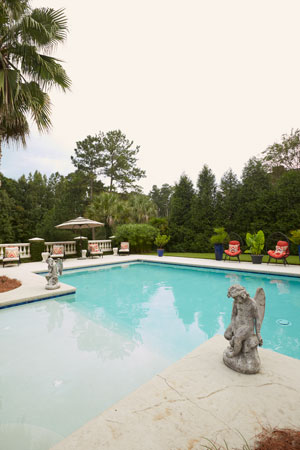
Michael designed the pool, which includes a sun shelf for lounge chairs, hot tub and stamped concrete surround, with a resort ambiance in mind. He also designed the balustrade around the area. An Atlanta company made the cement pieces, and they brought them back by U-Haul and put them together themselves.
Justin’s green thumb also is on full display in the Charleston courtyard, where staghorn ferns and bromeliads fill orchid boxes mounted on the brick walls of the house and the garage.
“The staghorn ferns and bromeliads are epiphytes, or air plants. They’re don’t need soil to live. They’re spread by spores,” Justin says.
An open-air porch between the pool and the courtyard features an overhang ceiling with wood paneling.
“The builder originally wanted the house to be a Charleston home with a narrow side porch,” says Justin. “If the side porch is open, it means ‘We’re accepting visitors.’ If it’s closed, we’re not.”
Suffice it to say, no wonder the side porch at this house is open permanently by design.
A couple that has plenty of get up and go can put on the brakes at their Clarks Hill Lake home when they’re ready for some down time

For two people who live life to the max, empty nesters Christine and Chris Walker took a minimalist approach when they downsized to a two-bedroom home on Clarks Hill Lake two years ago.
The exterior of the contemporary house is made of stucco, hardy board and 1-inch-thick cultured stone cut into 12-inch-by-24-inch pieces. Inside, the clean lines and open spaces offer the perfect backdrop to showcase the Walkers’ collections of art, sports memorabilia and automobiles.
“We have a fast life with the business we have,” says Chris, who owns Southeast Utilities of Georgia and also builds custom Ford F650 super trucks. “When we’re not working, we can spend time at the house for quiet and solitude. The lake is our passion. It’s our release.”
Sporting Life The Walkers, who used to spend almost every weekend at Clarks Hill, knew they wanted to build a house on the lake. When they first saw the property they now call home, however, they didn’t like it. “The lot was completely wooded,” says Christine. “You couldn’t even see the water.”
After a second look, however, they reconsidered. Now the footprint of the house occupies space that once was filled with giant boulders, and the front door marks the spot where a giant white oak tree stood.
“Everybody in the family helped prep the land for the house,” says Chris. “After the land was prepped and organized, then we built the house. It made the placement of the house easier. I oversaw or built everything.”
It took the Walkers about a year to build the house, and they moved into the Appling home two years ago. They also took a collaborative, but unorthodox, approach to the design of the house.
“We designed the garage, and then we designed the house around it,” says Chris. “I designed and engineered the house, and Christine was in charge of the interior design.”
A garage-first approach might be unconventional for most people, but not for the Walkers. Chris raced formula cars in the 1980s, and the custom truck builder also collects vehicles, which he houses in the 4,000-square-foot garage.
His collection includes a special edition, handmade Rolls Royce, which has a special sound system for opera and classical music with copper speakers and coils; a handmade, all carbon fiber 2019 McLaren 720s; a 1958 Jeep pickup, which was fully restored for Jay Leno’s garage; and a 110-year anniversary 2019 Morgan three-wheeler. He also has a fully electric, carbon fiber Lito Sora fighter bike – the motorcycle that Daniel Dae Kim’s character, Chin Ho Kelly, rode in “Hawaii Five-O.”
Chris collects professional sports memorabilia as well, and the garage is full of jerseys from pro athletes. “I’ve been collecting jerseys half my life,” says Chris. “I built trucks for a lot of these guys.”
He has signed jerseys from super truck customers including NFL stars Albert Haynesworth, Chad Ochocinco, Plaxico Burress and Irving Fryar and NBA greats Shaquille O’Neal and LeBron James. His collection also includes jerseys worn by professional athletes such as Dan Marino, Peyton Manning, Eli Manning, Russell Wilson, Joe Montana, Larry Bird and Greg Maddox.
Another sports memorabilia display in the garage features a collection of frames that each hold a photo of a Masters Tournament winner, his autograph and a badge from the year he won.
Other wall displays include boating memorabilia – Chris races boats now, with Christine at his side as his navigator. He stores his 45-foot and 47-foot race boats in Lincolnton, but the Walkers, who love to travel, keep their 26-foot Chris-Craft Catalina at their Chigoe Creek dock. The dock bears the name “Walker’s Cay,” which they fittingly call their lake retreat after the northernmost island in the Bahamas.
During the winter, they go out on the lake about twice a month. The rest of the year, they’re on the lake four times a week.
“There’s a little island where we like to go to meet friends,” says Christine. “When we’re at home, we’re usually on the lake.”
Designed to Entertain Even though the house only has two bedrooms, it was designed for sleepovers and entertainment. The house features four-and-a-half baths (including a full bath outside), and all of the couches turn into beds so friends and family who come over to play are welcome to spend the night.
Frequent guests include their children, Savannah Walker and Cameron Morbey, who live in the area. Their other two children – son Christopher, his wife, Alejandra, and their son, Eliah, who live in Florida, and daughter Whitney Weathers, her husband, Jim, and their daughter, Sadie Jane, who live in North Carolina – visit as well.
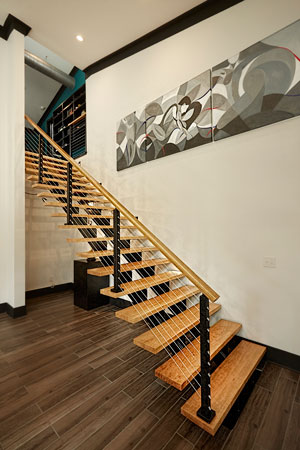
Just inside the front door, a floating staircase leads up to the entertainment room – a favorite hangout for the Walkers when they’re not traveling or on the lake. To build the staircase, they put that giant white oak tree from their property to good use. Chris had it milled, and he used the wood to make the 18 steps and the railing for the staircase.
“I would say what I wanted, and he made it,” Christine says. “He’s detail-oriented and romantic. And he listens.”
The entertainment room features a black bamboo floor, which is made up of planks that are 4.5 inches wide. “I like the sexiness of black hardwoods,” says Christine.
The room also features black trim work, teal walls and exposed A/C and heat duct. “It’s the one room that pops out from the rest of the house,” Chris says.
Railed openings on one wall overlook the living room on the first floor, and big picture windows on the opposite wall offer a view of the lake. Furnishings include white couches and a stamped aluminum coffee table. A chalkboard barn door opens to a full bath, which includes a vessel sink and a shower.
For fun and games, the room includes a pool table, a poker table, a dart board and a flat-screen TV. The entertainment room is full of more sports memorabilia as well. Chris’ collection, which he has amassed in 30-plus years, includes a pair of boxing gloves signed by Muhammad Ali; a half-dozen coins used for the opening coin flip in various Super Bowls; countless autographed NFL helmets signed by the entire teams (including a Patriots helmet from Tom Brady’s first Super Bowl); and an autographed football from the undefeated 1972 Miami Dolphins’ perfect season.
He also has a baseball from the 100-year anniversary of the World Series, which was signed by all of the living World Series MVPs; a case full of Hall of Fame bats; and a 1997 World Series trophy that belonged to Florida Marlins closer Robb Nen. “I taught him how to fish,” Chris says.
He loves all professional sports teams, but the south Florida native is partial to the Dolphins and the Marlins. Since moving to Georgia in 1996 (Chris was sold on Columbia County after a convenience store clerk told him “around here, you get your gas first and then pay for it”) he also has become a fan of the Falcons and the Braves.
The entertainment room leads to an open-air porch, where Christine and her girlfriends like to sit during “game night” at the Walker house. The porch features a fire pit surrounded by four square stools and an outdoor kitchen with a teppanyaki grill. A spiral staircase connects it to another porch below.
Spacious & Sleek A vaulted ceiling brings a feeling of spaciousness to the living room, where big picture windows overlook the landscaping in the front yard. “We don’t like curtains and doors,” says Christine.
However, the doors they have were made in Italy with solid wood, and they’re lined with aluminum strips. A two-sided, vented, propane-burning, slate fireplace separates the family room and the kitchen.
Chris made the open shelves in the kitchen from the oak tree they had milled and mounted them with industrial plumbing pipes that he painted black. The oak ceiling was made from the tree as well.
In addition, the kitchen features deep drawers and cabinetry with no hardware, a farmhouse sink, stainless steel appliances, a walk-in pantry with a pocket door and a chandelier, and countertops of vein-free, manmade material. A clear vase, which holds oil-based, floral décor, sits on the adjoining dining area table.
The master bedroom also features a vented, propane-burning, slate fireplace as well as a mirrored wall, a walk-in closet with an island in the middle and a “futuristic, crazy” chandelier.
“Every room has a chandelier, but that’s the only light fixture in the whole house that Chris picked out,” says Christine. “In the rest of the house, we have frou-frou chandeliers.”
Two oversized Oriental porcelain vases, which had belonged to Christine’s mother, stand in the corners on one side of the room. Doors lead out to a balcony on the other side.
The adjoining master bath has tile flooring, a stand-alone tub, a walk-through tile shower, two trough sinks and a separate water closet.
The antiques that Christine once favored have been replaced with sleek, modern furnishings, and artwork has a constant presence throughout the house as well. “Art can be passed down for many generations,” Christine says.
An oil painting, which they watched the artist finish on a river in Bangkok, hangs on one wall in the living room, and a hand drawing by Picasso hangs on another wall. A print called “Vintage” by Erté, a Russian-born 20th-century French artist and designer, hangs in the kitchen.
Tucked under the floating staircase, a hand-cut bronze sculpture, “Callisto” by Michael James Talbot, sits on a granite base. An abstract oil on canvas triptych lines the wall by the staircase.
They got a wood carving on the back porch in the mountains of Taipei, Taiwan when they took Christine’s mother there. “He is carved out of a tree root,” says Christine. “He has to be by a door because he wards off any bad spirits and brings in health and happiness.”
In a back hallway, the Walkers grouped 25 of their favorite black-and-white family photos in black frames with white mats. Even the laundry room is a gallery, where two pictures that Chris had done for his wife for Christmas one year, hang on a wall. To honor her penchant for footwear, one of the pictures is an oil painting of a shoe and the other features hundreds of shoes hand-etched with Xs and Os in copper.
While artwork is a necessity in the home, the couple took the opportunity to shed anything they no longer needed when they moved into their lake house. And that minimalist attitude hasn’t changed.
“If we don’t use it, we don’t keep it,” says Christine. “Except for clothes, shoes and pocketbooks. You can’t have too many of those.”